In brackets, the file's identifier in the official catalog and the document page. Quotes are the original English.
Jul 21, 1961
Mercury-Redstone 4 Not a sighting
27 seconds of radio from the recovery team. There is no sighting at all: they are talking about a dye marker that did not deploy.
[D014]
1962
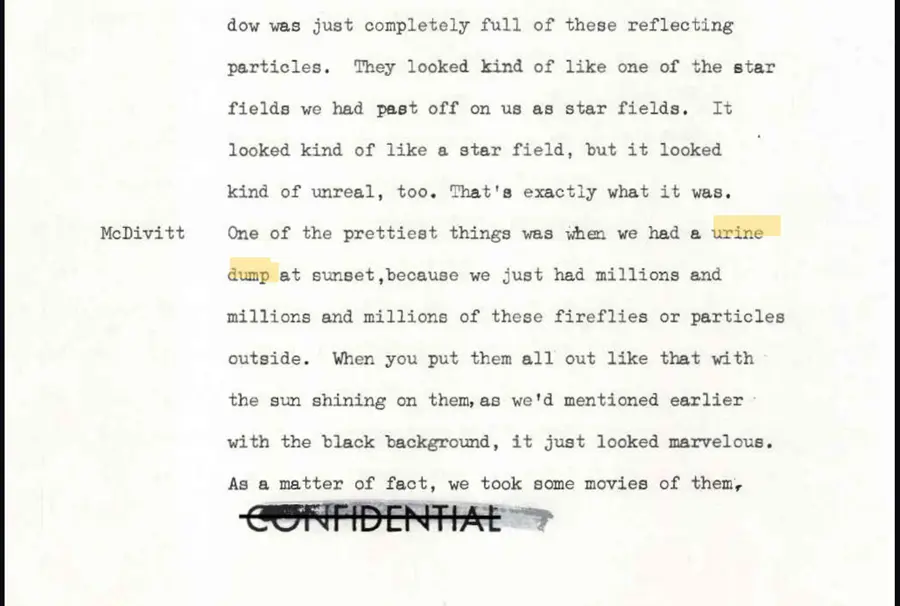
John Glenn's "fireflies" Explained
Glenn describes luminous particles around his capsule. In that year's internal memo, a NASA scientist writes that they had to come from the spacecraft itself.
[D015]
May 24, 1962
Mercury-Atlas 7 · Scott Carpenter Explained
"They look exactly like snowflakes to me." The same phenomenon NASA later explains: ice particles.
[D013]
Oct 3, 1962
Mercury-Atlas 8 · Wally Schirra Guess
"Little white objects that tend to come from the capsule itself and drift off." He links it to sunset himself; nobody confirms it.
[D012]
Nov 1962
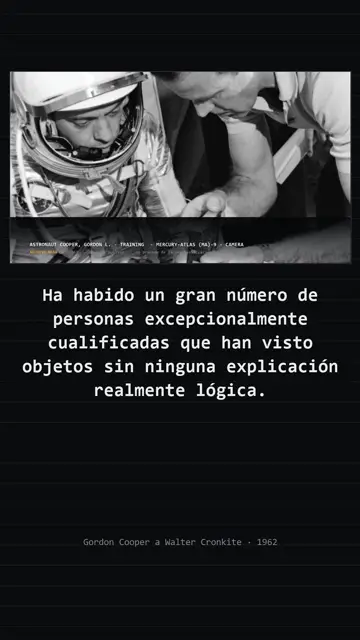
Gordon Cooper with Walter Cronkite Not a sighting
An opinion on television: "I think that maybe, in fact, each and every one of them does have an explanation." Years later, Cooper would take the UFO question to the United Nations (1978).
[D023]
May 15, 1963
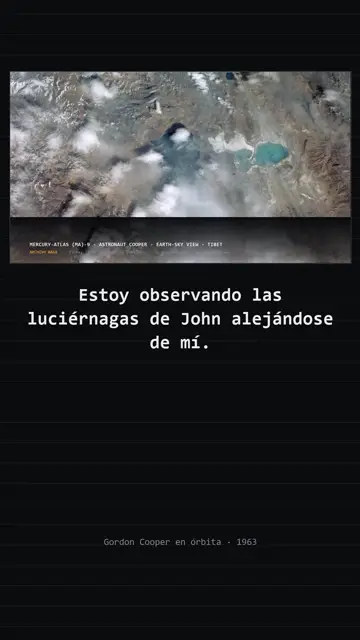
Mercury-Atlas 9 · Gordon Cooper Explained
"I am observing John's fireflies drifting away from me." NASA determined it was frozen condensation. In another recording he describes particles and, later, a xenon strobe beacon the crew had deployed; they are two different things.
[D010, D011]
Jun 1965
Gemini 4 · The object near Hawaii Unexplained
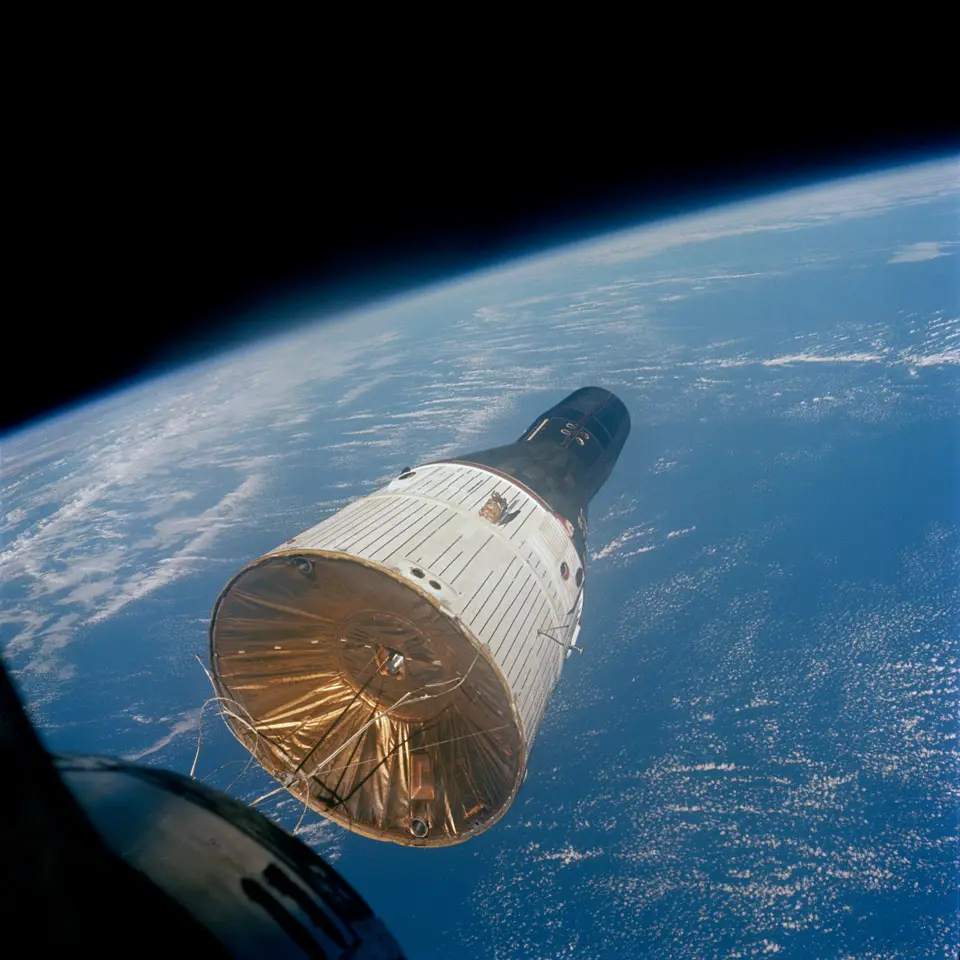
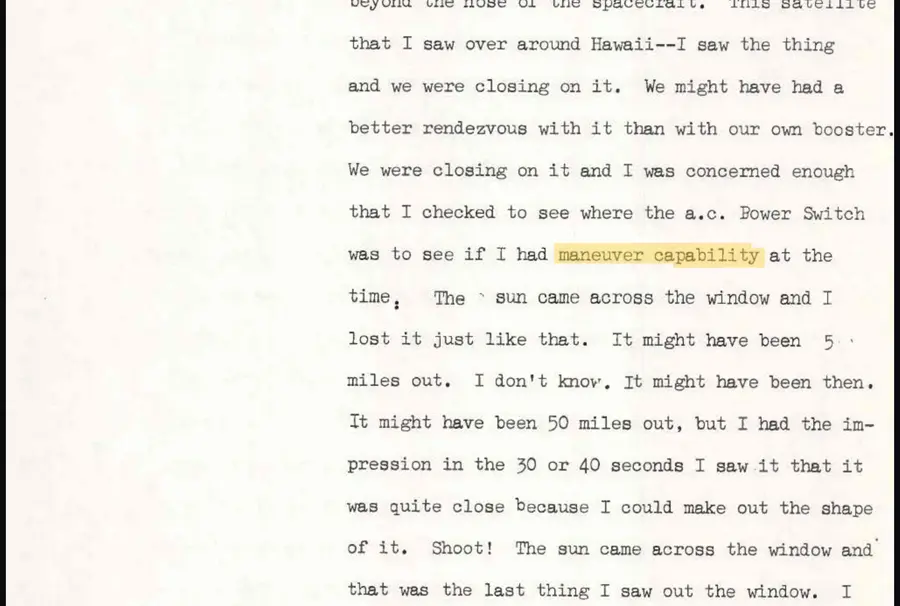
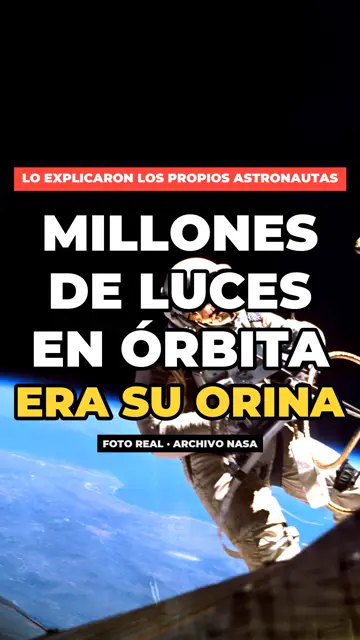
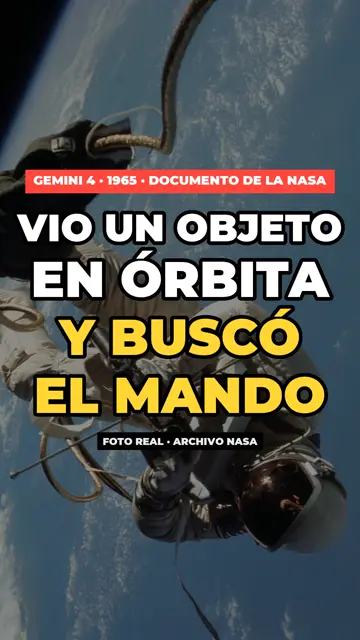
James McDivitt, debriefed aboard the USS Wasp: "This satellite that I saw over around Hawaii… we were closing on it… I was concerned enough that I checked… to see if I had maneuver capability." He lost it when the sun came across the window. The Condon Report (1968) left it without an adequate explanation; years later, engineer James Oberg suggested it was the second stage of their own rocket. On the same flight, the "sky full of stars" Edward White saw was fuel particles and dumped urine, and what they took for their own booster blinking was a planet: they explain that themselves.
[D016, p. 75 · D017]
Aug 1965
Gemini 5 · "We never could identify it" Unexplained
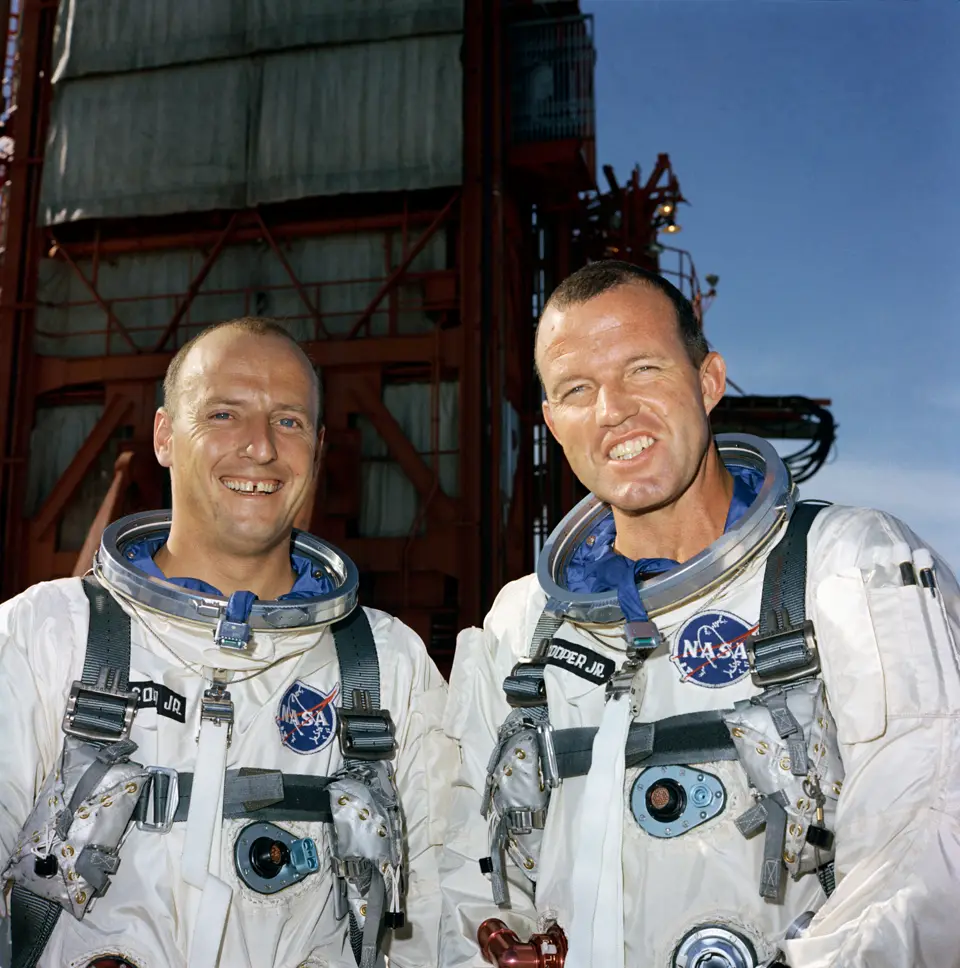
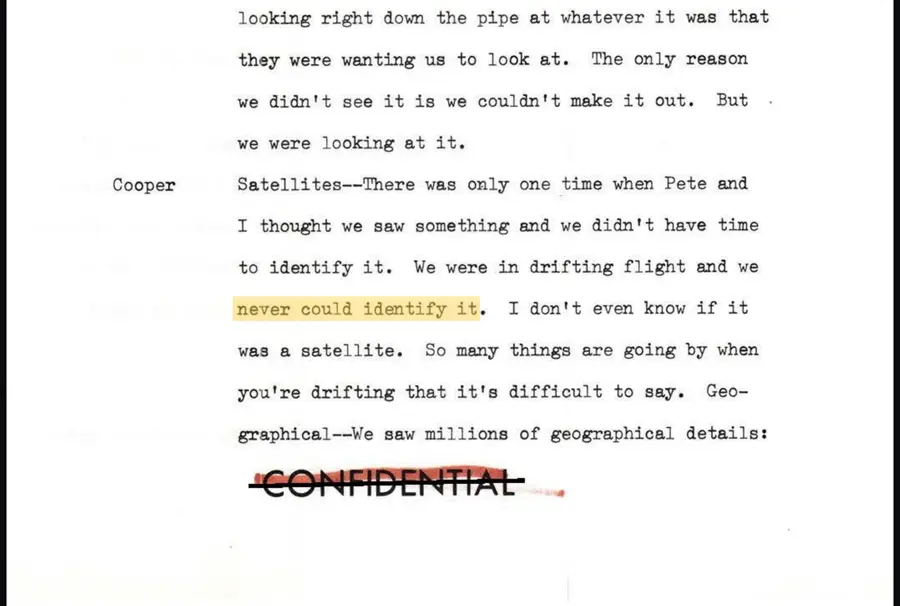
Gordon Cooper: "There was only one time when Pete and I thought we saw something and we didn't have time to identify it… I don't even know if it was a satellite." It is the weakest of the four cases, and he downplays it himself. On the page before, a washer and then a bolt float past the window.
[D020, pp. 153-154]
Dec 5, 1965
Gemini 7 · Frank Borman's "bogey" Unexplained
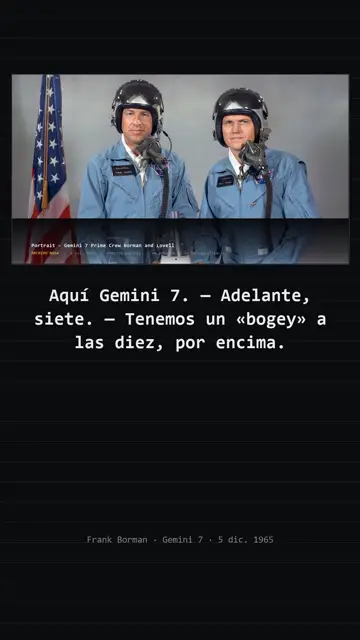
On the tape: "We have a bogey at 10 o'clock high." Houston asks whether it is the booster or an actual sighting. Borman: "We have several, looks like three up there, actual sighting" and, ten seconds later, "We also have the booster in sight." A handwritten note in the file reads "UFO SIGHTING BY BORMAN (GT-7)". In the debriefing two weeks later, the section on objects seen in orbit covers the booster, a missile re-entry and two satellites, but not the December 5 call. Not mentioning it proves nothing.
[D003A · D003, p. 2 · D021]
Jul 1969
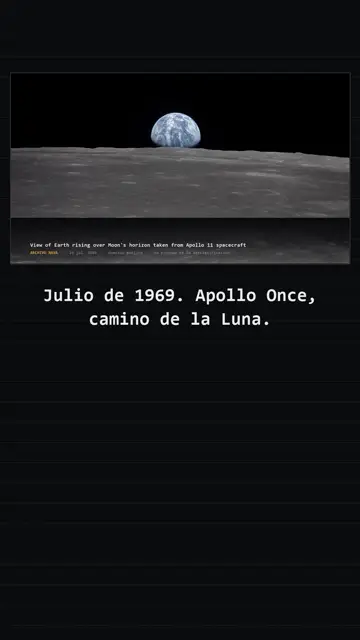
Apollo 11 · The object on the way to the Moon Unexplained
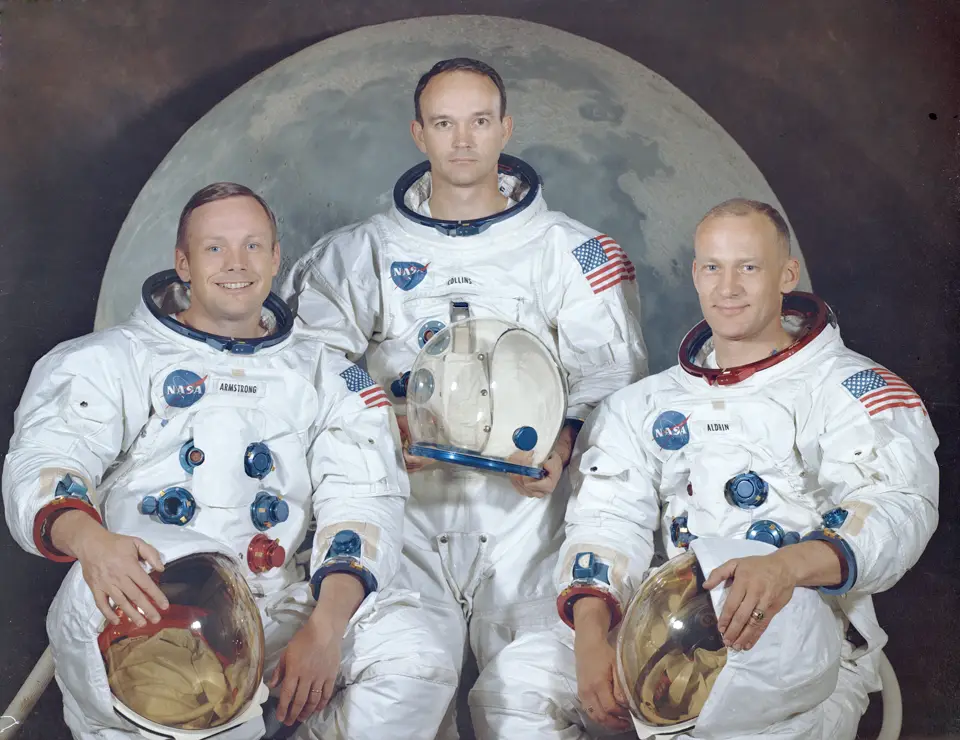
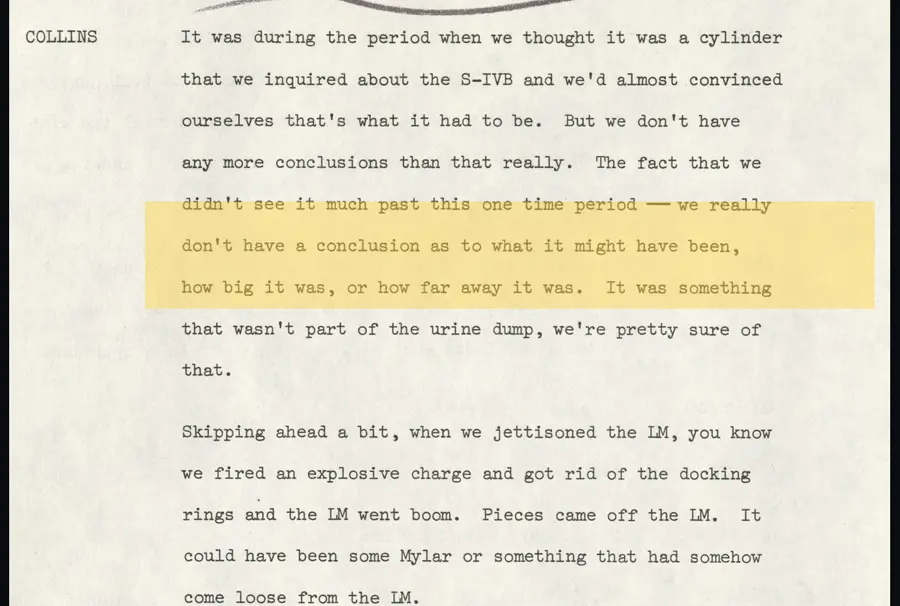
A day out, they see something of appreciable size. They thought it was their rocket's last stage: "We called the ground and were told the S-IVB was 6000 miles away." Michael Collins sums it up: "we really don't have a conclusion as to what it might have been, how big it was, or how far away it was." In the same document, the "laser" they saw on Earth was, according to Aldrin, "more probably a reflection off a lake."
[D004, pp. 6-34, 6-36 and 21-2]
Nov 1969
Apollo 12 · Flashes and particles Explained
Conrad, Gordon and Bean describe flashes while trying to sleep: cosmic rays passing through the retina, as Aldrin had reported on Apollo 11. From the surface, Bean sees particles moving away and says some seem to be "escaping the Moon"; Houston replies "roger". Most likely it was what he first thought, ice or gas from the module, but nobody confirms it to him.
[D008 · D001, p. 743]
Apr 1972
Apollo 16 · The flash seen from lunar orbit Unexplained
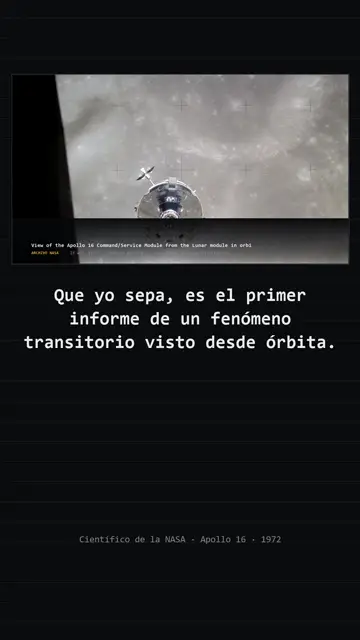
An astronaut describes a white flash, "brighter than the brightest star", unlike the cosmic-ray flashes ("I didn't see any of those"). In the science session it is called "the first report of a transient event of some nature that's been seen from orbit".
[D024]
Dec 7, 1972
Apollo 17 · The fragments Guess
"Very jagged angular fragments… tumbling." "Looks like the Fourth of July." Houston asks what they might be and Cernan answers: "Well, you know, I don't know." The crew suggests paint flakes or ice, and calls it "a wild guess". On the same flight, Harrison Schmitt sees a flash on the lunar surface north of Grimaldi crater and puts it down to a possible small impact.
[D009 · D002, pp. 2, 7, 11 and 16]
1973
Skylab 2 · Flashes with eyes closed Explained
Two or three flashes a minute, in bed. One crew member describes them as cosmic particles: one streak going into the eye and another coming out.
[Skylab 2 technical debriefing, Jun 30, 1973, pp. 23-20 and 23-21]
Sep 1973
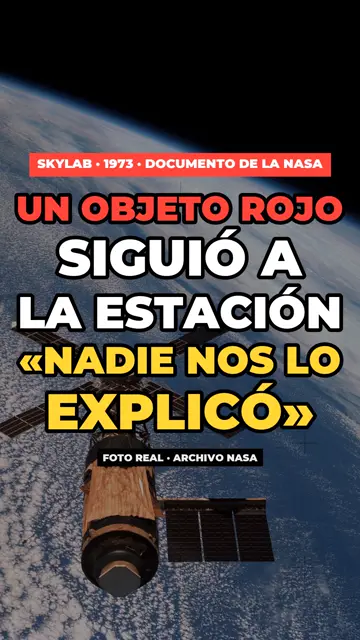
Skylab 3 · The red object Unexplained
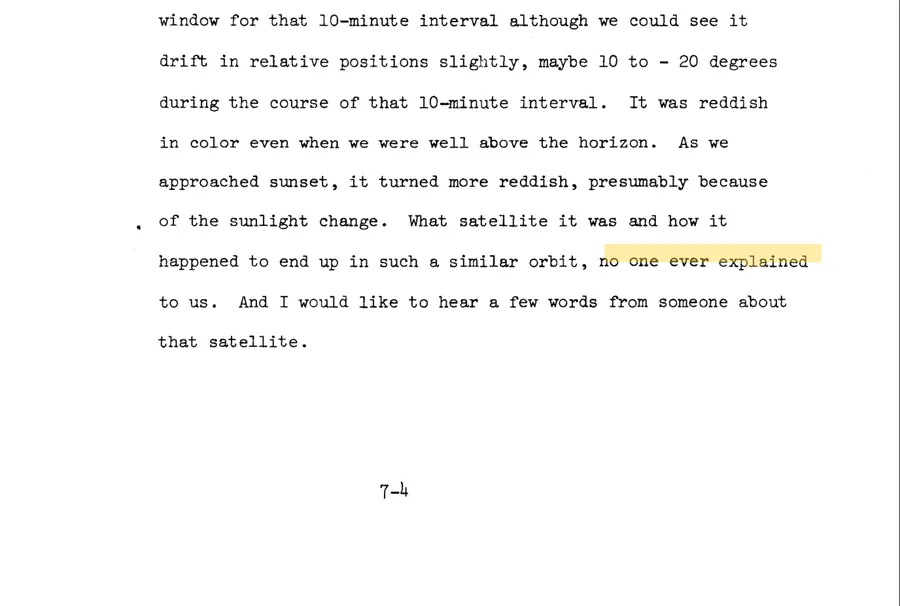
Bean, Garriott and Lousma follow a reddish light for five to ten minutes, "much brighter than Jupiter". Its brightness rises and falls every ten seconds: it is rotating. From how it fades as the station enters Earth's shadow, they estimate it was no more than 30 to 50 nautical miles away, in an orbit almost identical to theirs. They reported it and asked for it to be identified. In the October debriefing, Garriott: "What satellite it was and how it happened to end up in such a similar orbit, no one ever explained to us."
[D007, pp. 7-4, 7-5, 20-1 and 20-2]
1974
Skylab 4 · The lights Guess
Gerald Carr says they saw lights flashing outside "with a very definite motion relative to ours. We presumed that they were other pieces of Skylab, or possibly other satellites."
[D007, p. 7-8]
 MICE
MICE